Muay Thai Knees: Straight, Diagonal and Clinch Knees Explained
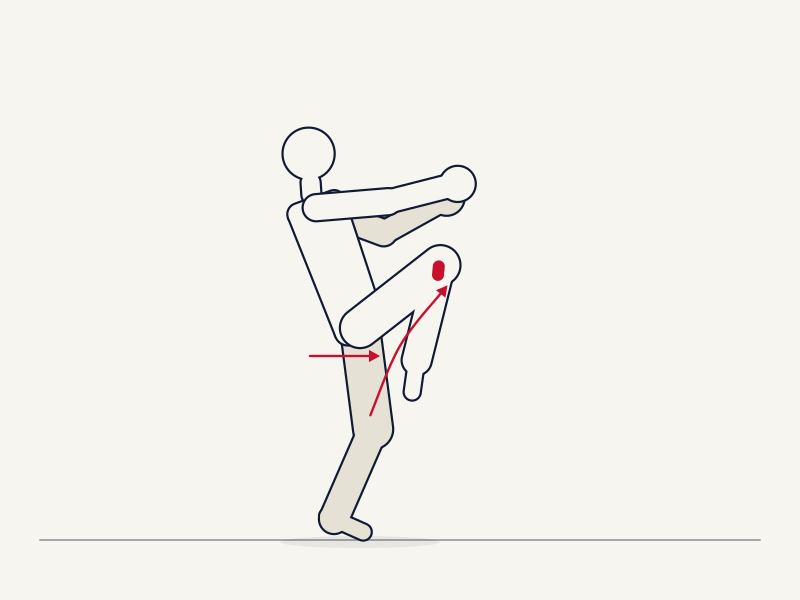
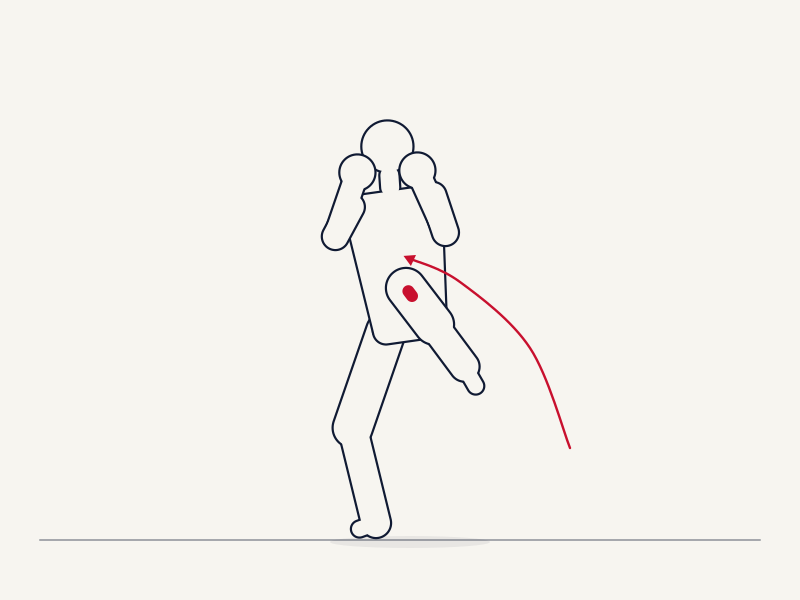
Knees (khao) are the strike Thai judges love most after the body kick. A straight knee that lands on the body and visibly moves the opponent is a clear score under traditional judging, and knee fighters (muay khao) build whole careers on walking forward, clinching and kneeing until the other person folds. For a beginner, the knee is also the most natural strike in the sport: you lift your leg and drive your hip. The problem is that most people throw it upward like a step, when it should be thrown forward like a spear. This guide covers the main knees, the mechanics, and how they connect to the clinch.
Written for orthodox. The rear knee (right) is the power knee; the lead knee needs a switch or a step.
Step 1: the straight knee
1. From the stance, shift weight onto the lead leg and come up onto the ball of the lead foot.
2. Drive the rear hip forward. This is the engine. The knee follows the hip; it doesn't lead it. Think about the hip bone travelling towards the target and the knee arriving because the hip took it there.
3. Point the foot. As the knee comes up, plantar-flex the rear foot so the shin and instep form a straight line. It tightens the whole leg and puts the point of the knee, not the thigh, into the target.
4. Lean back slightly at the top of the strike to counterbalance the hip and add penetration. Not a collapse; a controlled lean with the chin tucked.
5. Hands. The most common Thai method: the rear hand covers the face or extends as a long guard to the opponent's head or shoulder; the lead hand stays on the head. Some fighters keep both hands high. Whatever the guard, one hand is always protecting the chin, because an opponent who's being kneed will elbow back.
6. Return. Foot back to stance, hips square, hands up.
Targets: the midsection, especially the solar plexus and floating ribs. Against the thigh from a clinch. To the head only when the opponent's head is pulled down, and only where the rules allow.
Step 2: the diagonal and curved knees
Diagonal knee (khao chiang). Same drive, but the knee comes in at an angle, from outside to inside, to get around an opponent's guard or elbows. Used when the straight line is blocked.
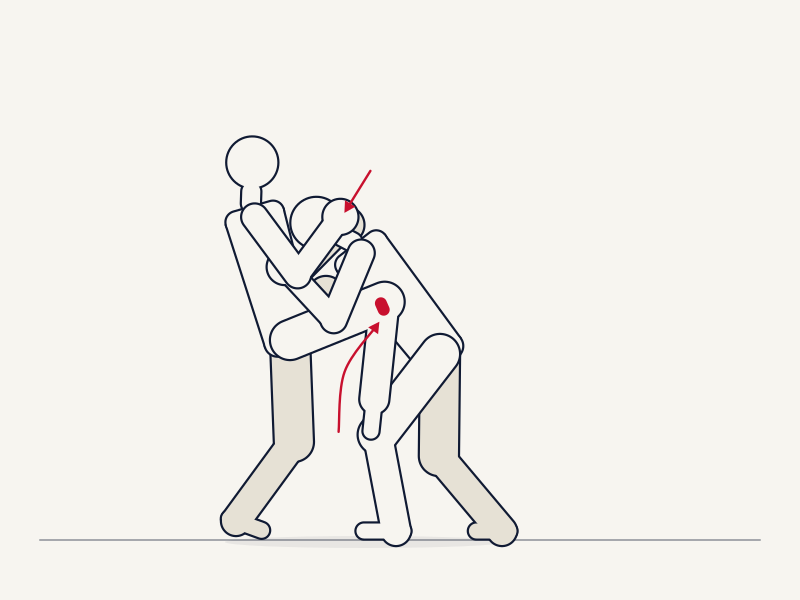
Curved or side knee (khao khong). The knee swings in horizontally, like a very short roundhouse with the knee. Almost entirely a clinch weapon, thrown to the ribs and thigh when the opponent is too close for a straight knee.
Beginners should build the straight knee first. The others are adjustments to it.
Step 3: the step-up and switch knee
Step-up knee. Step the lead foot forward and slightly outside, then drive the rear knee. Covers distance and lets you knee from kicking range rather than only from the clinch.
Switch knee. Hop and switch the feet, then throw the new rear leg as a knee. Same idea as the switch kick; the switch has to be small and the knee has to leave as the feet land.
Jumping knee. Not for now.
Step 4: knees in the clinch
The clinch is where most knees are thrown in a fight. The principles:
- Control first. Secure head or arm position before you knee. A knee thrown without control is a knee that gets you thrown or swept. See clinch basics.
- Break their posture. Pull the head down or turn the opponent so their hips are square to your knee.
- Knee with the hip, not the thigh. Even at clinch range, the hip drives forward. A knee lifted from the thigh is a bump.
- Alternate targets. Body, thigh, body. The opponent can't cover everything.
- Stay on the balls of your feet so you can turn and pivot between knees.
Under traditional Thai scoring, clinch knees that land clean and move the opponent, or that visibly take their wind, score highly. Knees to the thigh score less but wear the opponent down.
Drills
- Wall knees. Hands on a wall, drive the hip forward into a straight knee, foot pointed. Feel the hip, not the leg.
- Belly pad knees. Ten straight knees per side, slow, with the holder calling "hip" if you lift instead of drive.
- Step-up knees on the bag. Step, knee, step, knee across the floor, on a heavy bag or a hanging pad.
- Long-guard knees. Rear hand extended to the pad holder's shoulder, lead hand on your head, knee. Teaches the guard that goes with the strike.
- Clinch knee rounds. With a partner and a coach, light, alternating three knees each while maintaining position. Not for the first month.
Common mistakes
- Lifting the knee upward instead of driving it forward. The single biggest error.
- Foot flexed rather than pointed, so the thigh lands.
- Leaning forward at the top, which kills the hip drive and puts your face on their shoulder.
- Both hands down or reaching for the opponent with both hands during the knee.
- Stepping too wide on the step-up, opening the groin and losing balance.
- Kneeing without control in the clinch and getting swept.
- Knees to the head in sparring or where the rules forbid it. UK interclubs and many amateur bouts ban head knees; see from interclub to first fight.
Where to train this
Knees are learned on a belly pad with a coach who'll tell you when you're lifting instead of driving. Find one in the UK gym directory; for clinch-heavy training with Thai trainers, look at training camps in Thailand.
Related guides
FAQs
Which knee should I learn first? The rear straight knee from a standing position, then the step-up version. Clinch knees come once you've done some clinch work.
Are knees allowed in kickboxing? Under K-1 style rules, yes, but usually without clinching for more than a moment. Under full-contact kickboxing rules, no. See Muay Thai vs kickboxing.
Why do I lose my balance on the step-up knee? Your step is probably too wide or you're leaning forward. Step short and slightly outside, drive the hip forward, and keep the chin tucked and the eyes up.
Do knees to the thigh score? Under traditional Thai judging, less than a body knee, but they're used constantly in the clinch to tire the opponent. Under IFMA rules a knee to a legal target with force counts as a scoring technique.