Muay Thai Elbows: The Seven Strikes and How to Train Them Safely
Elbows are the reason Muay Thai fights end in cuts. They're short, hard, thrown from punching and clinch range, and the point of the elbow is a small, unforgiving surface. They're also the strike beginners are least likely to use well, because the mechanics are close to a punch but the range is shorter and the commitment is bigger. This guide names the main elbows, explains the two you should learn first, and is clear about where they're allowed, because the answer is "not in sparring and not in most UK beginner competition".
Thai names are given because gyms use them. Spellings vary; sok means elbow.
Where elbows are allowed
- Sparring: no. Elbows aren't thrown in ordinary sparring in any sensible gym, even with pads, because a light elbow still cuts. They're trained on pads and bags.
- Interclubs: usually banned. UK interclub rules commonly prohibit elbows and knees to the head. See from interclub to first fight.
- Amateur bouts: depends on the rule set. IFMA amateur rules require elbow guards and restrict elbows to the head for younger age groups; many UK amateur shows run "no elbows" or "elbows with pads" categories. Ask the promoter.
- Pro Muay Thai: yes, full rules. This is where elbows decide fights.
Learn them anyway. They're part of the art, they're a big part of the clinch, and a fighter who can't elbow is a fighter who's told the opponent where it's safe to stand.
The seven elbows
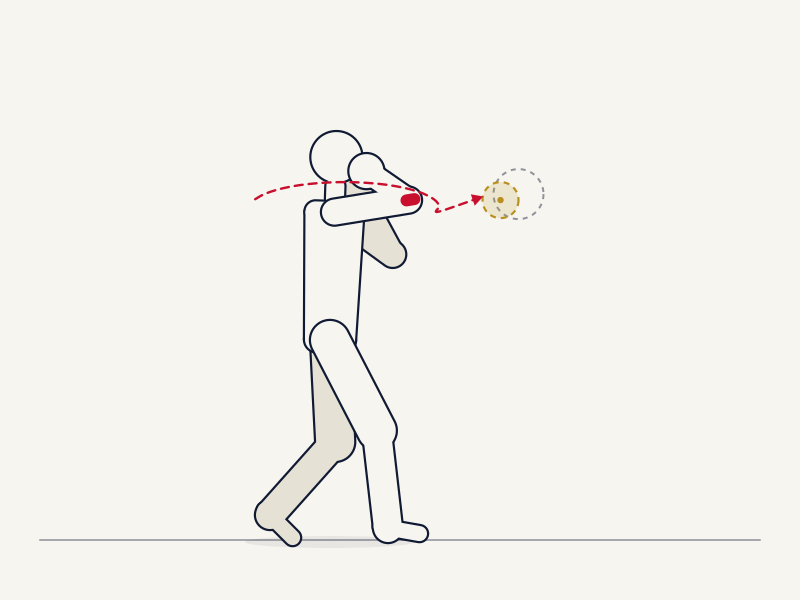
1. Horizontal elbow (sok tad / sok tat). Thrown like a hook: the elbow travels parallel to the floor, the hip and foot turn as they would for a hook, the fist ends up near your own opposite shoulder. Targets the jaw, temple or the side of the guard. The first elbow most people learn.
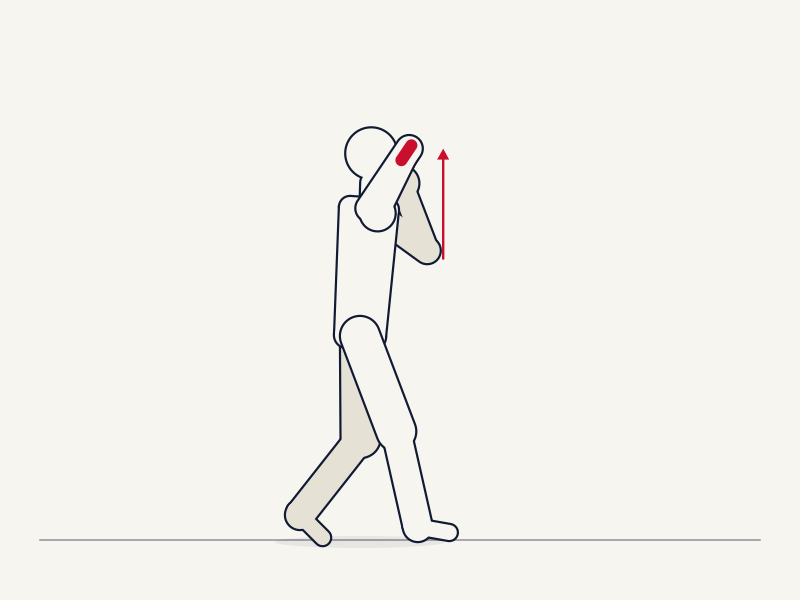
2. Uppercut elbow (sok ngad). The elbow drives up through the middle of the guard, like an uppercut with the forearm vertical. Fast, hard to see, and the classic clinch elbow when the opponent's head is down.
3. Slashing or diagonal elbow (sok ti). Comes down at an angle across the opponent's face, from high outside to low inside, like drawing a line from their eyebrow to the opposite cheek. The cutting elbow. Lead or rear.
4. Downward elbow (sok tong). Straight down, twelve to six, onto the top of the head or the collarbone. Sometimes thrown jumping. Also used downward onto the thigh in some styles.
5. Forward thrusting elbow (sok phung). The elbow spears forward and slightly up, driven by the hip, splitting the guard. Think of the arm as a spear with the elbow as the point.
6. Spinning elbow (sok klap). Turn your back to the opponent and bring the rear elbow round horizontally. High reward, high risk; if you miss, you're facing the wrong way.
7. Double elbow (sok ku). Both elbows together, usually a downward finish on a hurt opponent. A highlight-reel strike, not a fundamental.
How to throw the horizontal elbow
1. Start in the guard, hands up. The elbow is thrown from where the hands already are; no drawing back.
2. Turn the foot and hip exactly as for a hook. Rear elbow: rear foot pivots, rear hip drives. Lead elbow: small step or weight shift onto the lead foot, lead hip turns.
3. Keep the forearm horizontal and the elbow bent tight, fist near your own chin or ear. The point of the elbow leads. If the arm opens, you've thrown a forearm, which is legal but weaker.
4. Hit with the point of the elbow or the bone just below it. Not the forearm, not the bicep.
5. Keep the other hand on your face. Elbows are thrown at a range where the opponent can elbow back.
6. Return to the guard. Don't stay turned.
How to throw the uppercut elbow
1. From the guard, drop the elbow slightly and drive it straight up between the opponent's gloves, the forearm vertical.
2. The push comes from the legs and hip, like an uppercut: a small dip and drive rather than an arm lift.
3. Finish with the fist above your own head and the elbow at the opponent's chin, then pull it straight back down to guard.
This one is thrown constantly in the clinch, where the opponent's head is often pulled down onto it. See clinch basics.
Setting elbows up
Elbows live at punching range and inside it. The common entries:
- Jab, cross, rear horizontal elbow. The cross closes the distance, the elbow follows the same hip turn.
- Cross, lead elbow. The cross turns the hips one way, the lead elbow turns them back.
- Parry the jab, step in, slashing elbow.
- From the clinch: break one hand free and throw the uppercut or downward elbow while the other hand keeps head control.
See jab and cross for the punches that bring you inside.
Training elbows safely
- Pads. Thai pads and focus mitts. Ask the holder to angle the pad for the elbow you're throwing. Some holders use a belly pad and a mitt.
- Bag. Fine for downward and horizontal elbows; be careful with the point on a hard bag.
- Elbow pads for any partner drills that involve touching an elbow to a body, and only under a coach.
- Never in sparring. Even in "elbow sparring" with pads at some gyms, the intensity is light and the coach is watching. It's not a beginner activity.
Common mistakes
- Drawing the elbow back first. Telegraphs, and it's thrown from the guard anyway.
- Opening the arm so the forearm lands instead of the point.
- No hip turn. An elbow from the shoulder alone is a nudge.
- Reaching. Elbows are short. If you have to lean to land it, you're at punching range; punch.
- Dropping the other hand.
- Spinning elbows in sparring. No.
- Trying to elbow before you can hook. The hip mechanics are the same; learn them on the punch first.
Where to train this
Elbows need a coach holding pads correctly. Find a class in the UK gym directory; for full-rules training and elbow-heavy clinch work, a training camp in Thailand.
Related guides
- Jab and cross
- Knees
- Clinch basics
- From interclub to first fight
- How Muay Thai is scored
- Muay Thai vs kickboxing
FAQs
Are elbows allowed in UK amateur Muay Thai? It depends on the show and the sanctioning body. Many UK amateur bouts are run without elbows or with padded elbows; some allow full elbows for experienced amateurs. Interclubs almost never allow them. Check the rules for each event.
Do elbows score? Under traditional Thai judging, an elbow mostly scores when it visibly hurts or cuts. Under IFMA amateur rules an elbow landed with force is a scoring technique like any other, where elbows are permitted for that age group.
Which elbow should I learn first? Horizontal, then uppercut. They share mechanics with the hook and uppercut, and they're the two you'll use in the clinch.
Why do Thai fighters seem to cut so easily? The point of the elbow concentrates force on a small area over bone, particularly the brow. Under the small gloves and full rules of Thai stadiums, cuts are a normal part of the sport and doctors stop fights when they're bad enough.