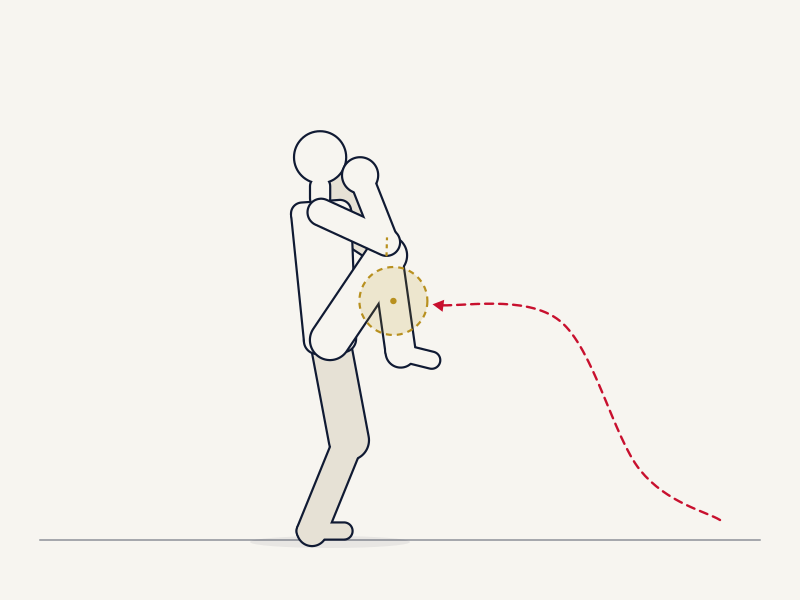
Checking and Blocking Kicks in Muay Thai
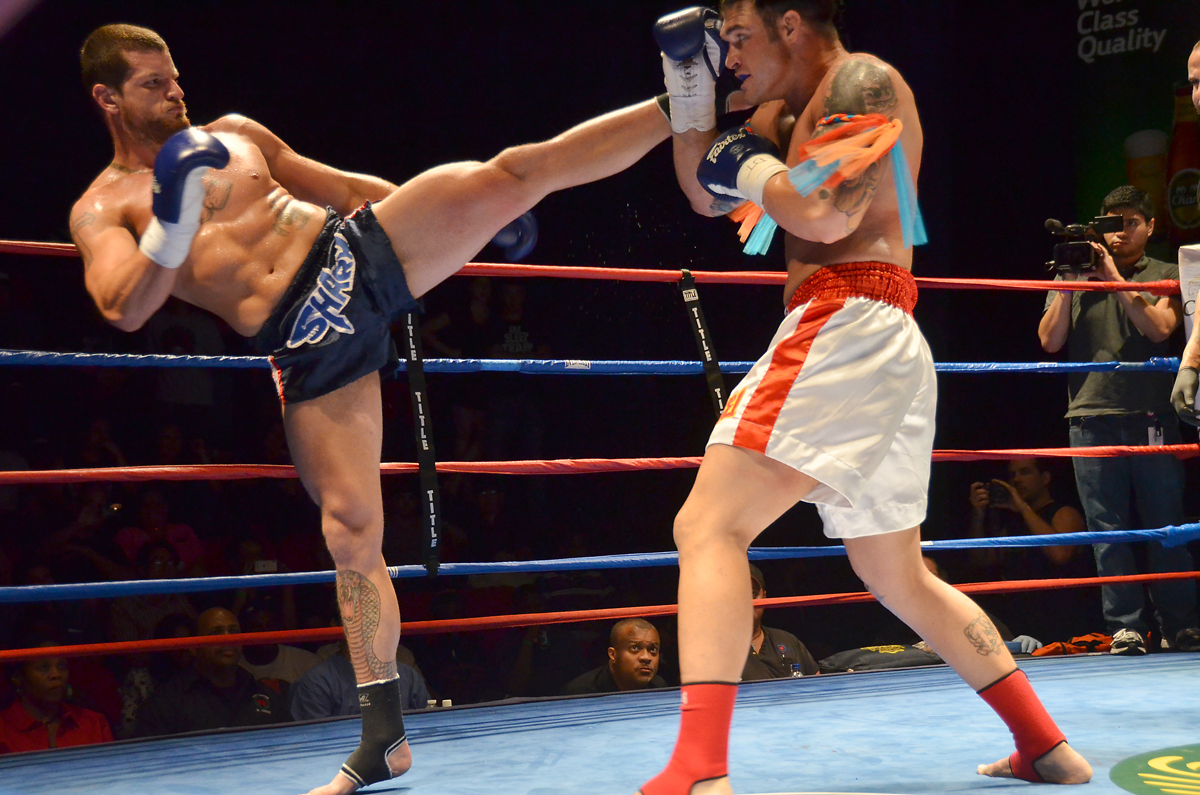
Defending kicks is half of Muay Thai and it's the half beginners skip. Everyone wants to learn the roundhouse; nobody wants to spend a round lifting their leg. But the fighter who checks properly makes the other person's kicks cost them: a shin meeting a shin hurts the kicker's lower shin as much as the checker's upper shin, and a body kick blocked on a firm arm scores nothing under any rule set. This guide covers the check, the arm block for body kicks, and the catch, in the order you'll be taught them.
Written for orthodox. Most kicks you defend as a beginner will be the opponent's rear (right) kick coming at your lead (left) side.
The check
The check is lifting your shin so the incoming kick lands on the hard, upper part of it rather than on your thigh or ribs.
1. See it early. The kick starts with the opponent's step-out and hip. Watch the hips and shoulders, not the foot. By the time you see the foot, you're late.
2. Shift weight to the standing leg. Weight goes onto the rear leg, on the ball of the foot, knee bent. If you're flat-footed or your weight is on the lead leg, the leg can't lift in time.
3. Lift the knee. For a low kick, the knee comes up to around hip height and the shin angles outward. For a body kick, the knee comes higher, towards the elbow, so the shin and elbow together cover the ribs.
4. Turn the hip and toes out. This is the detail that separates a check from a flinch. Turn the knee and toes outward so the kick meets the front and outer edge of your shin, not the soft inside. The upper shin and the knee are the hardest parts of the leg; that's what you want the kick to hit. A check with the toes pointing forward takes the kick on the side of the calf, and the kick goes through it.
5. Keep the leg solid. Tense the leg and hold it in place at the moment of impact. Don't flick the leg out to meet the kick; a moving shin gets knocked away and the kick lands anyway.
6. Hands up. The kick may be a set-up. The rear hand stays on the head, the lead hand covers the ribs on the checking side.
7. Return. Foot back down into stance. Some fighters kick straight back off the check; that's the next step, once the check is reliable.
A check done right hurts the kicker. That's the point. It's also why shin guards go on for partner drills and why conditioning matters over months.
Blocking body kicks with the arms
If you're too late to check a body kick, or the kick is high on the ribs, the arm block takes it.
- Keep the elbow tight to the body and the forearm vertical, so the kick lands on the forearm and elbow rather than the biceps or the ribs behind it. A loose arm means a bruised arm and a kick that half-lands.
- Brace. Tense the arm and the core at impact. Lean slightly into the kick, not away.
- Combine with the check for the classic Thai body-kick defence: knee up, elbow down, so the shin and forearm form a wall from thigh to shoulder.
Under traditional Thai scoring a kick that lands on a firm block "in position" doesn't score. A kick that knocks your arm into your own ribs does. That's the difference the brace makes.
Blocking head kicks
The high guard does most of this: both forearms up, gloves at the temples, elbows in. On a head kick, tighten the guard and roll slightly with the kick rather than trying to catch it. Beginners who try to catch head kicks get kicked in the head.
Catching the kick
When a body kick comes in and you've read it early, you can catch it under your arm and use it.
1. Take the kick on the arm as for a block, then close the arm over the leg, trapping the shin against your ribs, hand on the back of the calf.
2. Keep the other hand up. The opponent's hands are free and they're close.
3. Counter. The simple options: a cross to the face, a low kick to the standing leg, a step forward that pushes them off balance, or a sweep of the standing leg. A caught kick scores nothing on its own under Thai judging; the counter is what scores.
Rule note: under IFMA amateur rules, holding the leg is limited and prolonged holding is a foul. Catch, counter, release.
Timing drills
- Slow kicks and checks with a partner. Shin guards on. One kicks at half speed, the other checks. Twenty each, then swap. Watching the hips only.
- Random-target pad rounds. Holder throws low or body kicks at random between your combinations. You check, then continue.
- Check-and-kick. Check the kick, plant, kick back with the same leg. Builds the return.
- Shadow checks. In your shadow boxing, add a check every few strikes as if a kick came in. Cheap and it builds the reflex.
- Block-and-catch on pads. The holder swings a Thai pad at your ribs; you block, then catch and counter with a cross.
Common mistakes
- Late. Watching the foot instead of the hips.
- Flat-footed so the leg can't lift.
- Toes pointing forward and the kick landing on the calf.
- Flicking the leg at the kick instead of holding it solid.
- Leaning back as you check, losing balance and the counter.
- Dropping the hands to "help" the block. The kick was the set-up for the cross.
- Loose arm blocks taking body kicks on the biceps.
- Trying to catch every kick. Check first; catches are for kicks you've read early.
Where to train this
Checking needs a partner throwing kicks at you under a coach's eye. Find a class in the UK gym directory or a longer block at a training camp in Thailand.
Related guides
- The roundhouse kick
- The teep
- Muay Thai stance and footwork
- Conditioning for Muay Thai
- Best Muay Thai shin guards in the UK
- How Muay Thai is scored
FAQs
Does checking hurt? Yes, at first, for both people. The shin adapts over months of pad and bag work. Shin guards for all partner kicking drills until your coach says otherwise. See best Muay Thai shin guards in the UK.
Should I check with the lead leg or the rear leg? Whichever leg the kick is coming to. Most kicks come to your lead side, so the lead-leg check is the one you'll use most. Rear-leg checks against lead kicks and switch kicks come later.
Can I check a low kick to the inside of my thigh? Yes; lift the lead knee and turn it inward so the shin covers the inside. Inside low kicks are harder to read, so your stance width matters: too wide and your inner thigh is a target.
Does a blocked kick score against me? Under traditional Thai judging, a kick landing on a firm block in position doesn't score for the kicker. Under IFMA rules, a technique that's defended isn't a scoring technique either. Both systems reward the check.