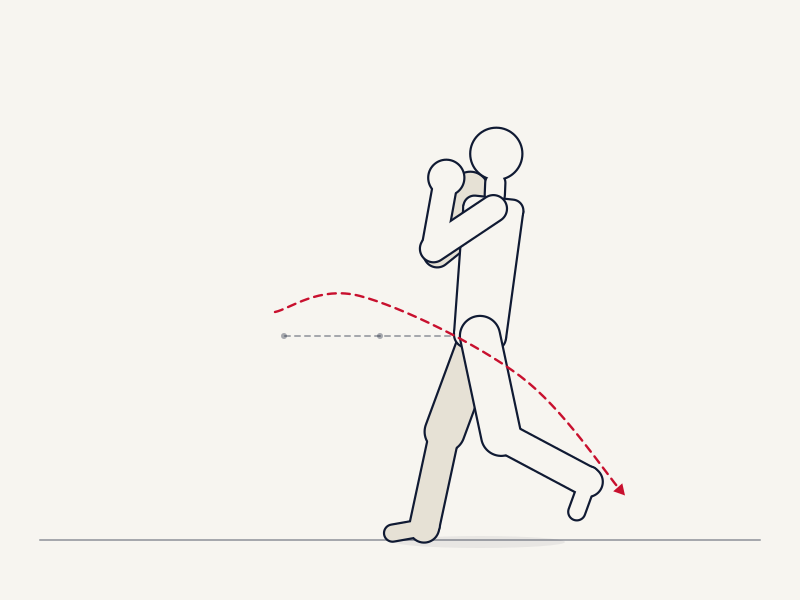
The Muay Thai Roundhouse Kick: How to Throw It Properly
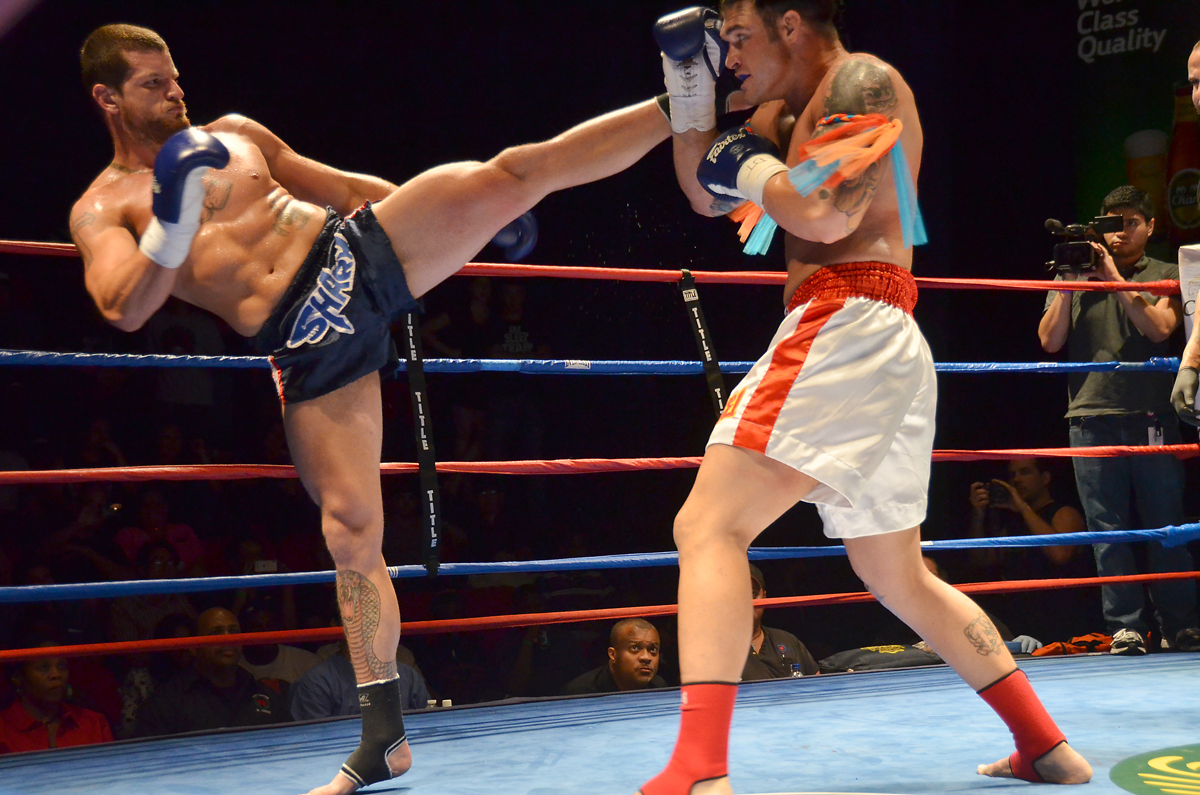
The roundhouse kick (te) is the signature strike of Muay Thai and the one that separates it from every other kicking art. It isn't a snap from the knee like a karate or taekwondo kick. It's a whole-body swing, thrown through the target with the shin, driven by the hips and the pivot of the standing foot. Done properly it's the highest-scoring strike under traditional Thai judging when it lands to the body. Done badly it's slow, off-balance and painful for the kicker. This guide breaks it down in the order coaches teach it.
Written for the rear-leg kick from an orthodox stance (right leg kicks). The lead-leg kick uses the same mechanics with a switch step first.
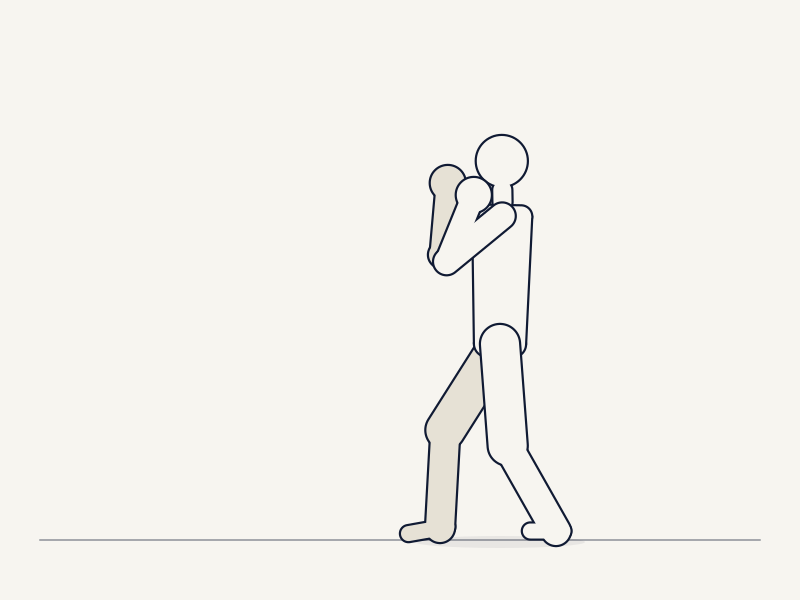
Step 1: the step-out
From the stance, step the lead foot forward and out to the side at roughly 45 degrees, toes turning outward. This does three things: it opens the hip so the kicking leg can swing freely, it moves your head off the centre line, and it puts the standing foot where it needs to be to pivot.
Beginners skip this step and try to kick from a square stance. The result is a kick that comes up rather than around, with no hip in it.
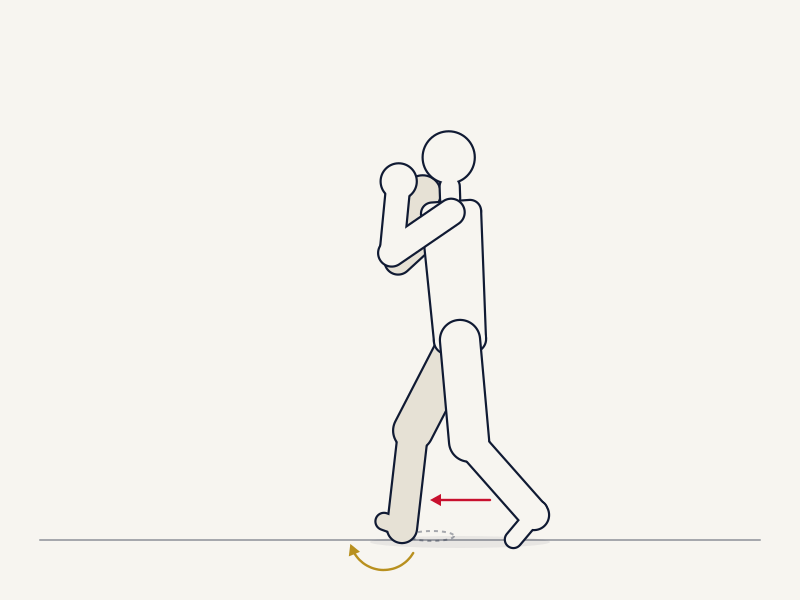
Step 2: pivot and rise
As the kicking leg leaves the floor, come up onto the ball of the standing foot and pivot on it. By the time the shin arrives at the target, the standing heel has turned to face the opponent. Staying up on the ball of the foot lets the hip rotate fully and reduces friction; kicking flat-footed jams the hip.
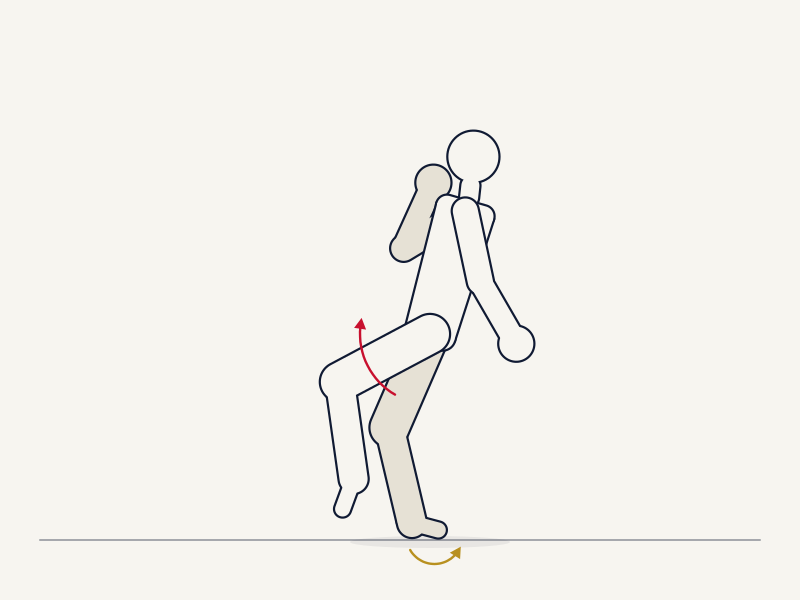
Step 3: turn the hip over
This is the kick. The hip of the kicking leg rotates over the top, so the leg swings horizontally into the target rather than lifting up at it. Think about turning your hip to face the target, then past it. The knee stays slightly bent and relaxed through the swing; the leg is a bat, not a lever.
The same-side arm swings down and back as the hip turns. It counterbalances the rotation and adds speed. The opposite hand stays on your face, because a kick with both hands down is a kick that gets countered with a cross.
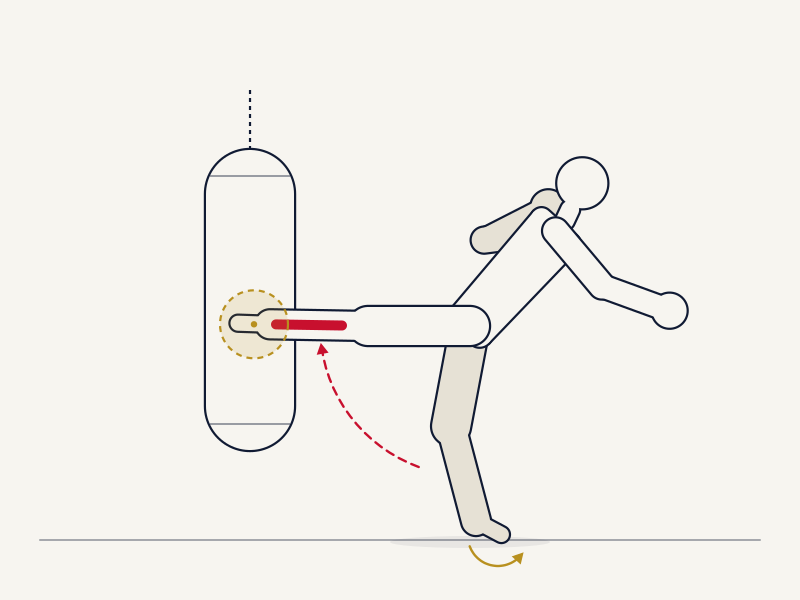
Step 4: land with the shin
Contact is made with the lower shin, a hand's width or so above the ankle, never with the top of the foot. The foot is relaxed and pointed. On a body kick the shin should meet the ribs or the arms; on a low kick it lands on the outside or inside of the thigh; on a head kick it lands on the neck or jaw. Kicking with the foot is how people break metatarsals on elbows.
Kick through the target, not at it. Aim to finish the swing a foot past where the pad or body is.
Step 5: return
Bring the leg back the way it came and plant it in stance. Coaches say "the kick isn't finished until you're back in your stance". If you swing all the way round on a miss, that's a moment where you're facing away from your opponent with no defence. Control the finish.
Targets
- Low kick. Thigh, outside or inside. Slows the opponent's movement over rounds. Thrown lower and more downward, from the same mechanics.
- Body kick. Ribs, floating ribs, arms. The Thai scoring favourite: a clean body kick that moves the opponent is worth more than several punches under traditional judging. See how Muay Thai is scored.
- Head kick. Neck and jaw. Same mechanics with more hip and a taller step-out. Not something to force before you have the flexibility; a head kick with a bent, cramped hip is slow.
The lead-leg (switch) kick
To kick with the lead leg, do a switch step: a quick hop that swaps the feet so the lead leg becomes the rear, then throw the kick as above. The switch has to be small and fast, and the kick should leave as the feet land, not a beat after. It's used against southpaws and to attack the open side.
Drills
- Step-out repetitions. No kick. Just step out, pivot, return. Fifty each side.
- Slow kicks on the bag. Twenty per leg at half speed, thinking only about hip and shin. Power is later.
- Kick and reset. Every kick followed by a full return to stance and a jab. Fixes the swing-through habit.
- Pad rounds calling body and low. Holder calls the target after your jab-cross so you learn to adjust height without changing the mechanics.
- Ten-kick sets on the bag. Continuous kicks alternating legs. Builds the rhythm and the conditioning together.
Conditioning note
Shins get tender in the first weeks. The adaptation comes from repeated kicking of pads and bags with rest between, not from bottles, sticks or trees. See conditioning for Muay Thai. Wear shin guards for partner kicking drills; see best Muay Thai shin guards in the UK.
Common mistakes
- No step-out. The hip stays closed and the kick comes straight up.
- Flat standing foot. No pivot, so the hip can't turn.
- Kicking with the foot instead of the shin.
- Both hands down or the wrong hand swinging.
- Leaning back to lift the leg higher. You lose the hip and the balance.
- Kicking at the target rather than through it.
- Uncontrolled spin on a miss.
- Muscling the kick instead of relaxing and whipping.
- Kicking too close so the knee lands or the shin jams. Adjust distance with the step-out.
Where to train this
The kick is learned on Thai pads with someone who can hold them properly. Find a class in the UK gym directory, or spend a block kicking pads twice a day at a training camp in Thailand.
Related guides
- Muay Thai stance and footwork
- Jab and cross
- The teep
- Checking and blocking kicks
- Conditioning for Muay Thai
- Best Muay Thai shin guards in the UK
- Muay Thai vs kickboxing
FAQs
Why does my kick have no power? Almost always the hip. You're lifting the leg instead of turning the hip over, or you're flat-footed so the hip can't rotate. Slow it down and exaggerate the pivot.
Should I point or flex the foot? Pointed and relaxed for a roundhouse. Flexing the foot tightens the leg and puts the instep in the way. (The teep is different: ball of the foot, toes pulled back.)
How high should I kick? As high as your hips allow with full rotation. A perfect body kick beats a cramped head kick. Height comes with flexibility and repetition.
Is the Muay Thai roundhouse different from a kickboxing roundhouse? Yes. Kickboxing styles often snap the kick from the knee or land with the instep. The Thai kick is a full swing with the shin, thrown through the target, and is generally considered harder but slower to return. See Muay Thai vs kickboxing.